
For most of my adult life, the number on the scale only ever moved one direction.
I wasn't lazy. I wasn't uninformed. I could recite calorie counts and macro splits like a party trick. I'd done the crash diets — the one where you drink the maple-syrup lemonade, the one that banned an entire food group, the app that buzzed my phone with a little guilt-trip every time I opened the fridge after 8 p.m. Every single one of them worked. For about eleven days.
Then life happened. A bad week at work. A birthday. A Tuesday. And it all came back, usually with a little extra riding along, like the weight had gone out, told its friends, and brought them home.
By the time I reached my heaviest, I'd stopped weighing myself. I didn't need the number; my body was telling me plenty. I was out of breath tying my shoes. I planned outings around which restaurants had chairs without armrests. I dreaded photos so much that there's a two-year gap in my own life where I simply don't exist on camera. And somewhere in there, quietly, without ever deciding it out loud, I'd concluded that this was just who I was now. Some people are the fit ones. I was the other kind. That was the story, and I'd stopped arguing with it.
This is the write-up I wish someone had handed me at the start. Not the highlight reel — the boring, repeatable, unglamorous truth about what finally worked, and the expensive, exhausting detours that didn't.
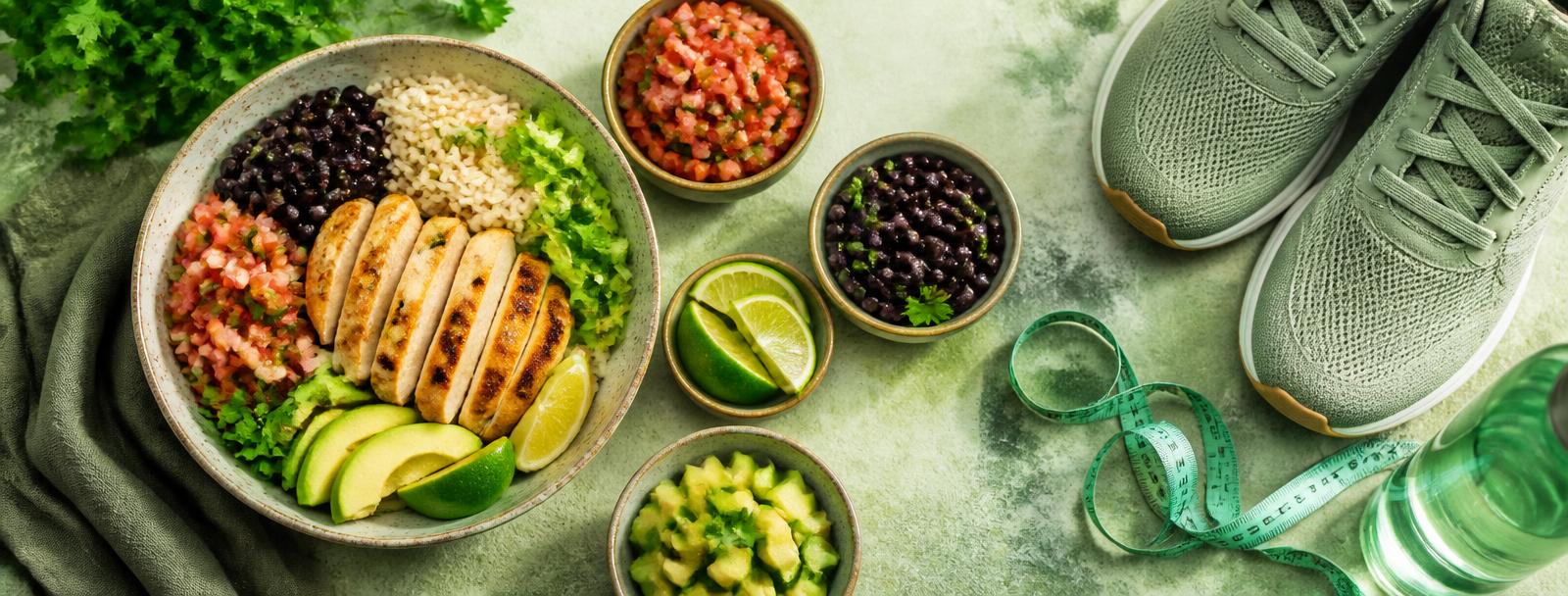
Before you dive in: every meal that got me through this — the lazy go-to dinners, the snacks that didn't derail me, the full simple rotation — is in our free recipe bundle. It's yours at the end of this story, no cost. Keep it in your back pocket while you read — I'll point out the exact meals as they come up.
Grab the free bundle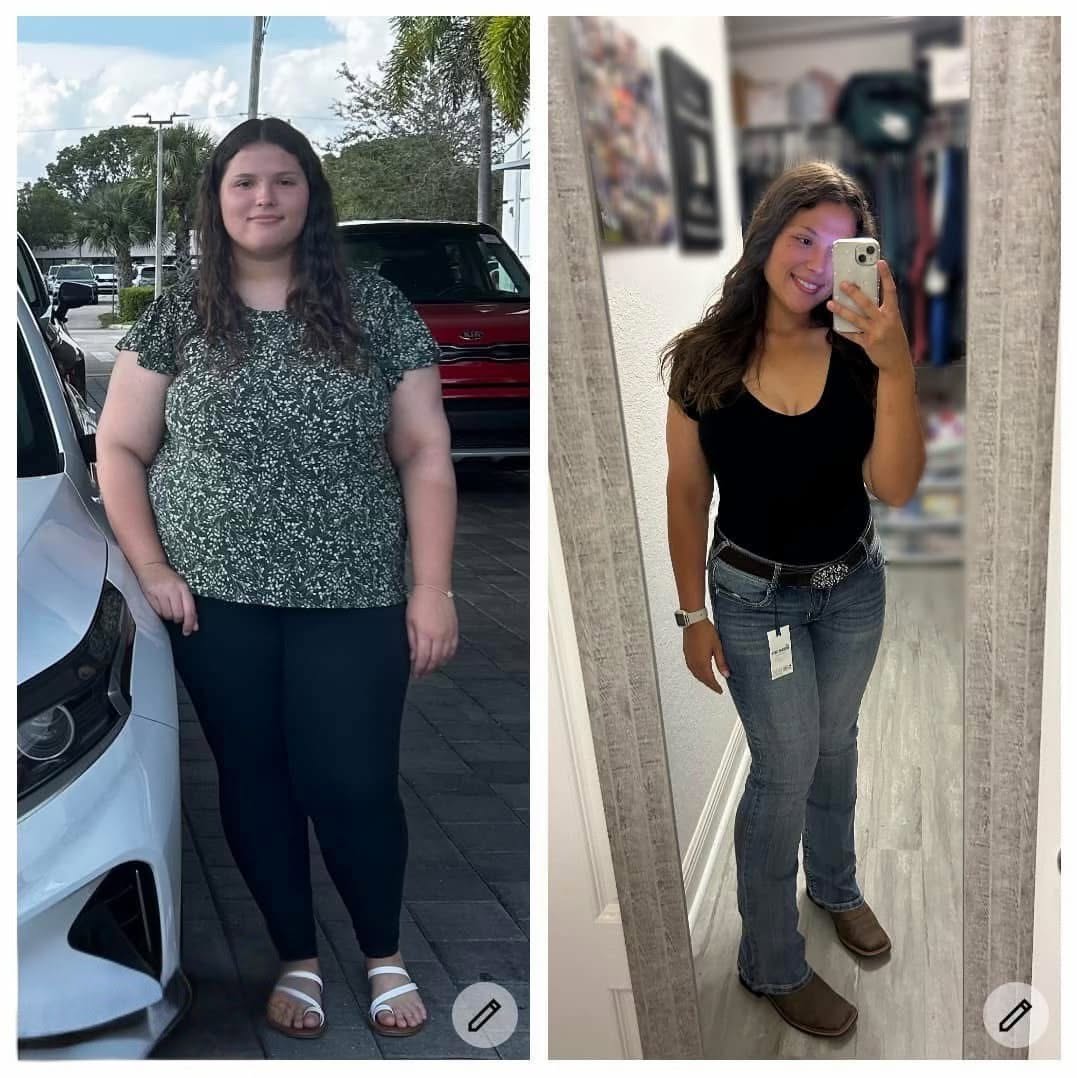
Part 1: The day it stopped being abstract
The turning point wasn't dramatic. There was no mirror-shattering moment, no doctor wagging a finger, no rock bottom you'd see in a movie.
My doctor just turned her monitor around and showed me my own numbers. Blood pressure creeping up where it shouldn't be. Blood sugar sitting on the wrong side of "fine." Nothing catastrophic — not yet — but a clear little constellation of arrows all pointing the same direction, toward a version of my life I did not want to live.
She didn't lecture me. She'd clearly learned that lecturing doesn't work. She said one thing, almost offhand, that lodged itself in my brain and wouldn't leave: "You don't have to fix all of this. You just have to change the direction."
Change the direction. Not hit a goal weight. Not earn a beach body by summer. Not become a different person. Just turn the trend line the other way, even slightly. For the first time in years, the task in front of me felt small enough that I could imagine starting it without immediately wanting to lie down.
I think that's the first thing nobody tells you: the size of the goal is often the thing that defeats you before you begin. "Lose 60 pounds" is not a plan. It's a verdict. "Turn the line the other way this month" is something a human being can actually do on a Wednesday.
The breakthrough wasn't a diet. It was realizing I could keep the foods I loved if I changed everything around them.
Part 2: What I tried first (and why it half-worked)
My very first instinct, of course, was to go nuclear.
Cut everything. No bread, no rice, no pasta, no sugar, no anything I actually enjoyed. Scorched earth. And for about two weeks it was genuinely glorious — the scale dropped fast, I felt righteous and disciplined, I told everyone who'd listen about my new regime. I was insufferable. I was also, I now understand, mostly losing water weight and willpower at roughly the same rate.
Week three, I ate an entire pizza standing up in my kitchen at 11 p.m., barely tasting it, feeling like a failure with every bite and eating faster because of it.
Here's what took me an embarrassingly long time to understand about that pizza. The fast initial drop had been mostly water — glycogen and the fluid it holds — so the "progress" I thought I was crushing was always going to stall and scare me. But the real problem was structural: the rules were so strict, so total, that breaking one of them felt exactly like breaking all of them. One slice didn't feel like "one slice." It felt like proof that I'd failed the entire project, so I might as well finish the pizza and start again Monday. All-or-nothing thinking turns a single 300-calorie slice into a 2,000-calorie spiral, and then into a week off, and then into quitting.
The framing was the trap. Not the pizza.
So eventually I flipped the whole thing on its head. Instead of building a list of forbidden foods, I built a small list of meals I actually liked that happened to be lighter — and I let everything else stay on the table, just in smaller and less frequent doses. Tacos didn't get exiled from my life. They just stopped being the entire day's caloric budget in one sitting. Nothing was banned, so nothing could be "cheated" on, so there was no spiral to fall into. That single reframe did more for me than any diet ever had. If you want the drive-thru version of that math, our low-calorie ordering guide breaks it down item by item.
Part 3: The system, minus the willpower
People love to ask what my "secret" was, and they are always, without fail, a little disappointed by the answer. There wasn't a secret. There was a system boring enough to survive a bad week — and surviving bad weeks, it turns out, is the entire game.
Here's the whole thing.
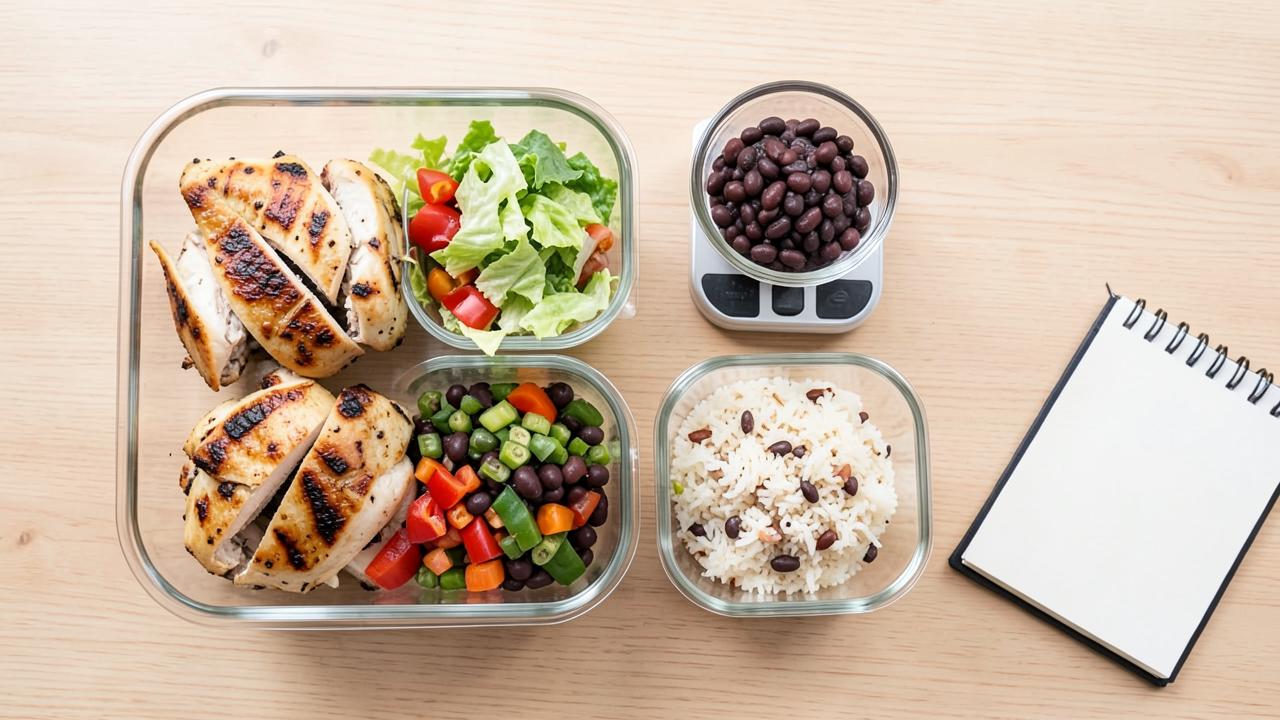
I ate mostly the same handful of meals, on purpose. Not out of iron discipline — out of laziness, honestly. When I had five or six go-to meals I could assemble half-asleep, I stopped making high-stakes decisions at 6 p.m. while standing exhausted in front of an open fridge. That moment — tired, hungry, decision-depleted — is where most "good intentions" go to die. Every choice you remove in advance is one you can't get wrong later. My rotation wasn't exciting. It was reliable. Reliable beats exciting every time, because you don't have to feel inspired to do it.
I tracked for information, not punishment. I wrote down what I ate — not to shame myself, but to notice patterns like a detective, not a judge. And the log told me things no person could have. My "healthy" afternoon, the one I'd have sworn was clean, was quietly 600 calories of blended coffee drinks I didn't even register as food. I wasn't lying to anyone; I genuinely didn't know. The log knew. Once I could see it, I could change it — and I didn't have to change anything else, because that one swap alone moved the needle.
I walked. That's the entire exercise plan. No gym, no program, no equipment. I'll come back to walking in a minute, because it quietly did more than anything else on this list and it deserves its own section.
I gave every single change three full weeks before judging it. This rule saved the whole project, and I'll show you exactly why in the next part, because it's tied to the moment I nearly quit.
I made the healthy choice the easy choice. I stopped relying on being a strong person and started relying on being a lazy one. Cut vegetables in the fridge at eye level. Junk food not in the house at all — not hidden, just not purchased, because I can't eat at midnight what I never brought home. A water bottle always within reach. I wasn't resisting temptation all day; I'd quietly arranged my kitchen so there was less to resist. Willpower is a battery that drains. Environment doesn't need charging.
Part 4: The plateau nobody warns you about
Around week 14, the scale simply stopped.
I was doing everything the same. Same meals, same walks, same effort, same discipline that had been working for three months straight — and I was getting back exactly nothing. One week. Then two. Then three. The number just sat there on the display, unmoving, mocking me, as if the previous three months had been a clerical error it was now correcting.
This is where I had quit every single other time in my life. And here's the cruel part, the part I desperately want you to hear before you get here yourself: a plateau feels exactly like failure, even when it is the precise opposite. It has the same symptoms — effort in, nothing out — so your brain files it under "this isn't working," when what's actually happening is your body recalibrating to the new, lighter you. A lighter body burns fewer calories doing the same things. The math that worked at the start needs a small nudge to keep working. That's not failure. That's success changing the rules on you mid-game.
What got me through was not more willpower. I was already out of willpower. What got me through was that three-week rule I'd promised myself. I'd committed, in advance and in writing, to change only one variable at a time and give it three full weeks before deciding it didn't work — precisely so that a scary stretch couldn't stampede me into blowing everything up.
So instead of torching the whole system in a panic, I added twenty minutes to my daily walk. That's all. Boring. Patient. Almost passive. And then I waited, white-knuckling the not-quitting rather than white-knuckling a diet.
Week 17, the scale moved again.
If I could tattoo one sentence onto every person starting this journey, it would be this: the plateau is not the wall, it's the middle. Almost everyone who "can't lose weight" is actually someone who quit, entirely reasonably, during a plateau that would have broken three weeks later. The people who make it aren't stronger. They just didn't quit during the part that felt like quitting was the only sane option.
Part 5: The unglamorous habit that did the most
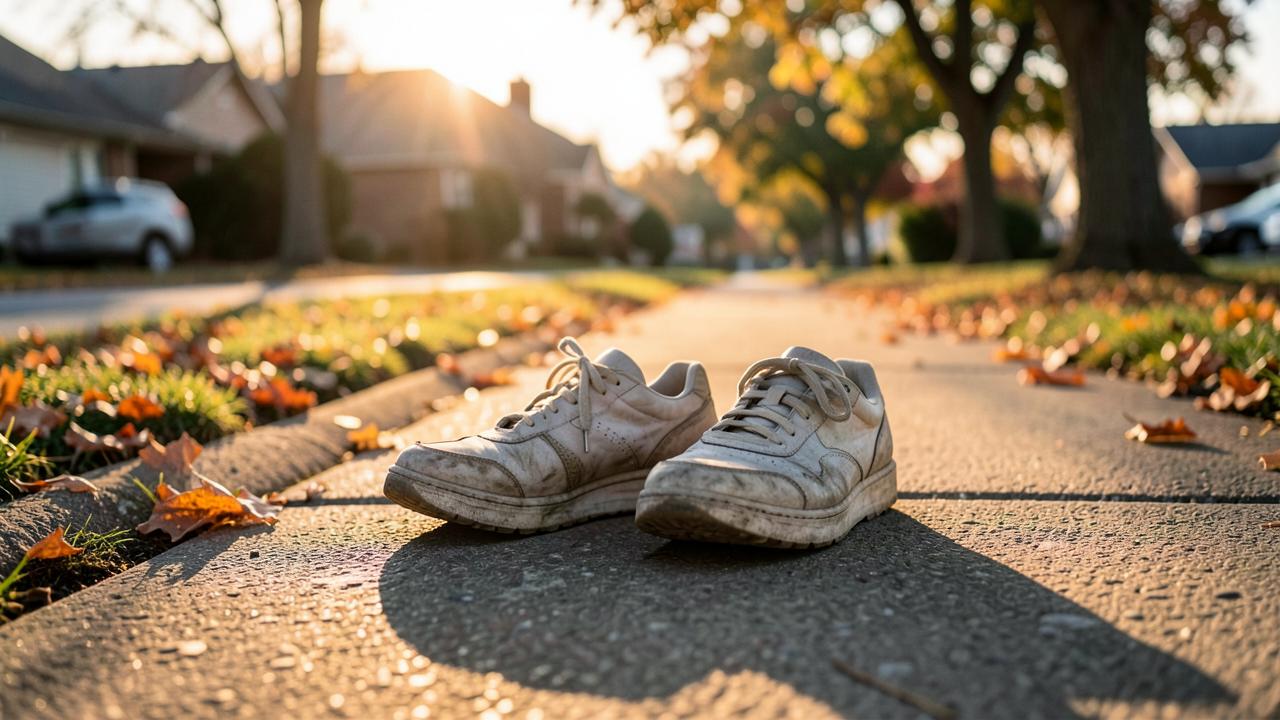
I want to talk about walking specifically, because it is the least impressive thing on this entire list and it mattered more than all the rest combined.
I didn't have the energy for a gym. I didn't have the confidence to be the biggest person in a room full of fit strangers and mirrors. So I skipped all of it and just walked — after dinner at first, honestly because it physically removed me from the kitchen during the exact window I was most likely to go back for seconds. It started as avoidance. It became the best part of my day.
Now, walking does not torch calories the way a punishing workout does, and anyone who tells you otherwise is selling something. What it does is quieter, and far more durable. It became the anchor that every other habit tied itself to. On days the walk happened, the eating tended to hold together too — not because of the calories burned, but because the walk was a daily, physical, undeniable vote for the kind of person I was becoming. It was fifteen minutes of proof, every single day, that I was still doing this. Miss a meal target and the day feels blown. But you can almost always still take the walk, and the walk keeps the streak — and the identity — alive.
That's the real mechanism nobody puts on a poster: consistency compounds, and the easiest habit to stay consistent with is usually the one that quietly carries the hard ones.
Part 6: The mental side (the part that actually decides it)
Everything above is logistics. This part is what actually determined whether the logistics survived, and it's the part diet books skip.
I stopped moralizing food. Food is not "good" or "bad," and I am not "good" or "bad" for eating it. A cookie is roughly a hundred and fifty calories and some genuine joy. That's the whole story. The guilt I used to pile on top — that was extra, self-inflicted, and it never once burned a single calorie. It only ever led to the spiral. When I let food just be food, one slice could stay one slice.
I planned for the fall, not just the climb. I knew, mathematically, there would be bad days — holidays, stress, a week where everything went sideways. So instead of pretending I'd be perfect, I decided in advance what a bad day would look like: I eat the thing, I enjoy the thing, and the very next meal is a normal one. Not a punishment meal. Not a fast. Just the next normal meal. A bad meal became a bad meal — an hour — instead of a bad week. That single boundary is the difference between a stumble and a relapse.
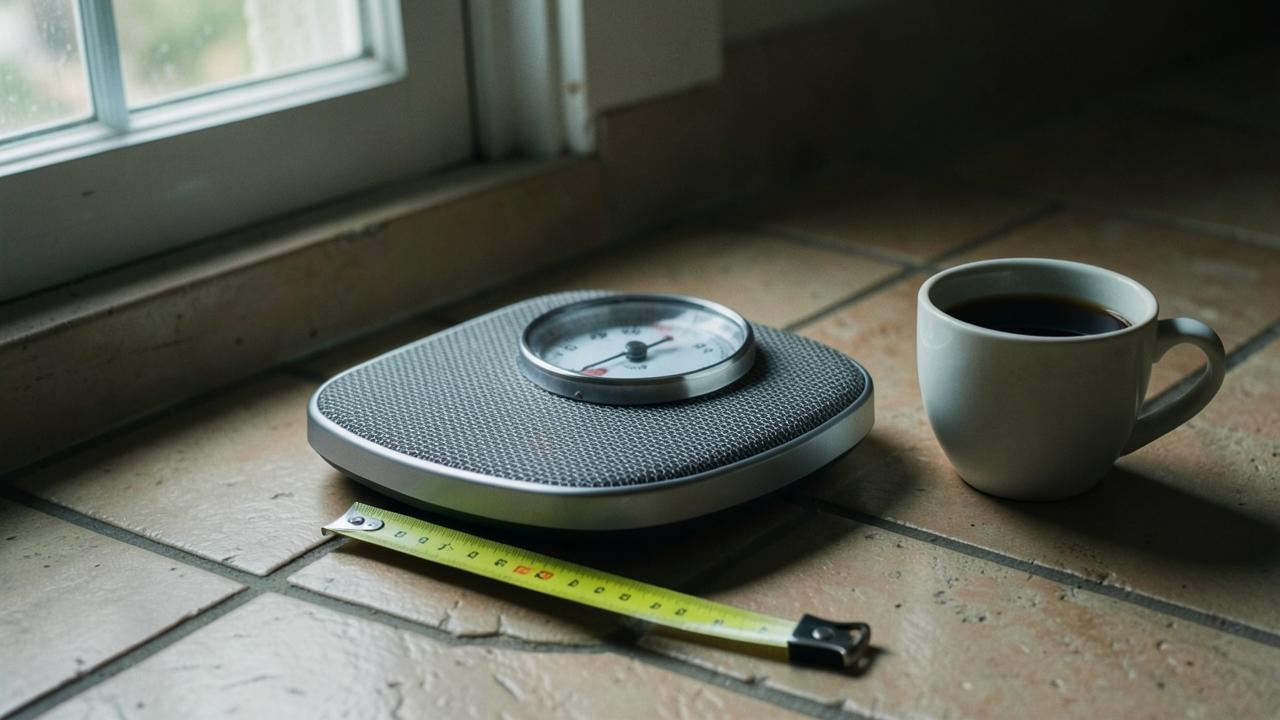
I measured progress in more than pounds. The scale is a moody, lying little machine that reflects water, hormones, salt, and sleep as loudly as it reflects fat. So I stopped letting it be the only judge. I tracked how my clothes fit. Whether I got winded on the stairs. How I slept. My mood. My energy at 3 p.m. On plateau weeks when the scale sulked, these other signals kept quietly telling the truth — that the direction was still changing even when the number wouldn't cooperate.
I told a few people, and stayed off the internet's timeline. I let a couple of trusted people in — not for applause, but so I wasn't carrying it alone. And I stopped comparing my week two to someone else's year two. Every viral transformation you scroll past is someone's middle or end, photographed on their best day. Comparing your beginning to their ending is a rigged game you invented specifically to lose.
Part 7: Roughly how it actually went, week by week
People always want the timeline, so here's the honest shape of it — not a prescription, just what a real, non-linear arc looked like from the inside.
Weeks 1–2: Fast drop, mostly water. Felt amazing. Dangerously convinced it would always be this easy. It would not.
Weeks 3–6: The first real correction. The scale slowed to something sane and unglamorous — a pound or so a week — right as motivation faded. This is the first quiet quitting point for most people. The system, not the excitement, is what carried it.
Weeks 7–13: The good stretch. Habits starting to feel less like effort and more like routine. Clothes noticeably looser. The first time someone noticed out loud — which felt incredible and, weirdly, also a little exposing.
Weeks 14–16: The plateau. Described above. Nearly quit. Added twenty minutes of walking and, mostly, held on and waited.
Weeks 17–28: Movement again, slow and steady. Somewhere in here the habits went quietly automatic. I stopped "being on a diet." I was just... living, and the living happened to be lighter.
Weeks 29–40: The long, boring, beautiful glide toward the goal. Less and less dramatic, which is exactly how you want it. By the end, the goal number almost arrived as an afterthought, because the point had stopped being the number a long time ago.
Part 8: Frequently asked questions
Did you have to give up your favorite foods?
No — and being told to is exactly why my earlier attempts failed. Nothing was banned. Portions and frequency changed; the foods stayed. A plan you can't live inside for a year is a plan you're going to quit.
How often did you weigh yourself?
Eventually, once a week, same day, same morning conditions — and I paid more attention to the monthly trend than any single number. Daily weighing sent me on emotional roller-coasters over water weight that meant nothing. If the scale wrecks your day, weigh less often. It's a tool, not a verdict.
What about exercise beyond walking?
It came later, and only because I wanted it, once I had the energy and confidence. It was never the engine. What you eat drives weight; movement drives how you feel, your strength, your mood, and your ability to keep going. Both matter. They don't do the same job.
How did you handle eating out and holidays?
I stopped treating them as disasters to survive and started treating them as normal life to enjoy, with a plan. Eat the thing. Enjoy it fully. Make the next meal a normal one. One indulgent meal has never made anyone gain real weight — it's the two weeks of "well, I already blew it" that follow which do the damage. Our high-protein ordering guide is basically that plan, written down.
Was there a supplement, pill, or shortcut?
No. I know that's not what anyone hoping for a shortcut wants to read. The unsexy truth is that the boring system beat every shortcut I ever tried, precisely because I could keep doing it long after the excitement — and the shortcuts — wore off.
Part 9: Where I landed
By the end, I'd reached a number I'd once filed permanently under fantasy.
But the number stopped being the point somewhere around the halfway mark. The real win — the one no before-and-after photo can ever capture — was the day the whole thing stopped being hard. Ordering the lighter option wasn't a heroic act of will anymore; it was just Tuesday. Taking the walk wasn't a chore to force; it was the part of the day I looked forward to. The habits had gone automatic, and I wasn't white-knuckling anything.
That's the transformation the pictures don't show you. Not the smaller body — the quieter mind. The absence of the constant, exhausting internal negotiation I'd been losing for years.
What I'd tell you if we grabbed coffee
Start smaller than feels worth it. Absurdly small. A ten-minute walk. One swapped meal. The tiny start you can actually keep for a year beats the perfect plan you'll abandon by Friday. Consistency compounds; intensity fades.
Track for information, not punishment. You're a detective gathering clues, not a judge handing down a sentence.
Expect the plateau, and do not let it lie to you. It is not the wall. It is the middle. It shows up right when you're most convinced it isn't working, and it breaks for the people who simply refuse to quit during it.
Stop moralizing food. It's food. You're allowed to eat it and stay exactly the same good person you already are.
And find the version of "healthy" you can still be doing a year from now — one that has room in it for the foods you love and the life you actually live. That's the whole thing. That's the secret that isn't a secret, the one nobody can sell you because it costs nothing and takes patience instead of money.
You don't have to fix everything. You just have to change the direction.
Every meal I leaned on across this journey — the lazy go-to dinners, the snacks that didn't derail me, the whole simple, repeatable rotation — is in our free recipe bundle. Same real food from this story, nothing exotic, nothing you can't pronounce. Grab the free bundle here.
Week 0 · 232 lbs — Starting point. One week of honest tracking, no changes yet — about 3,100 calories a day.
"The burrito was never the problem. Deciding the burrito was a failure — that was the problem."
60 lbs
lost
40 wks
to goal
0 foods
banned